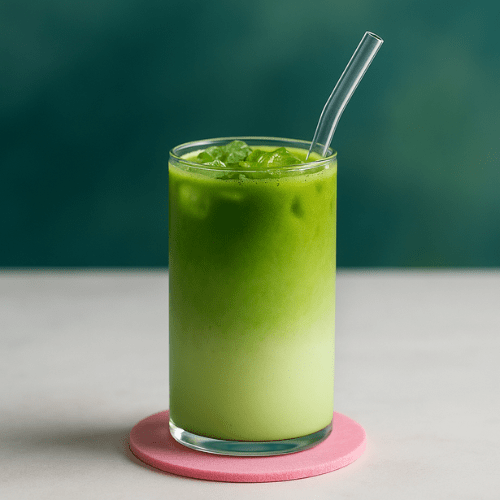

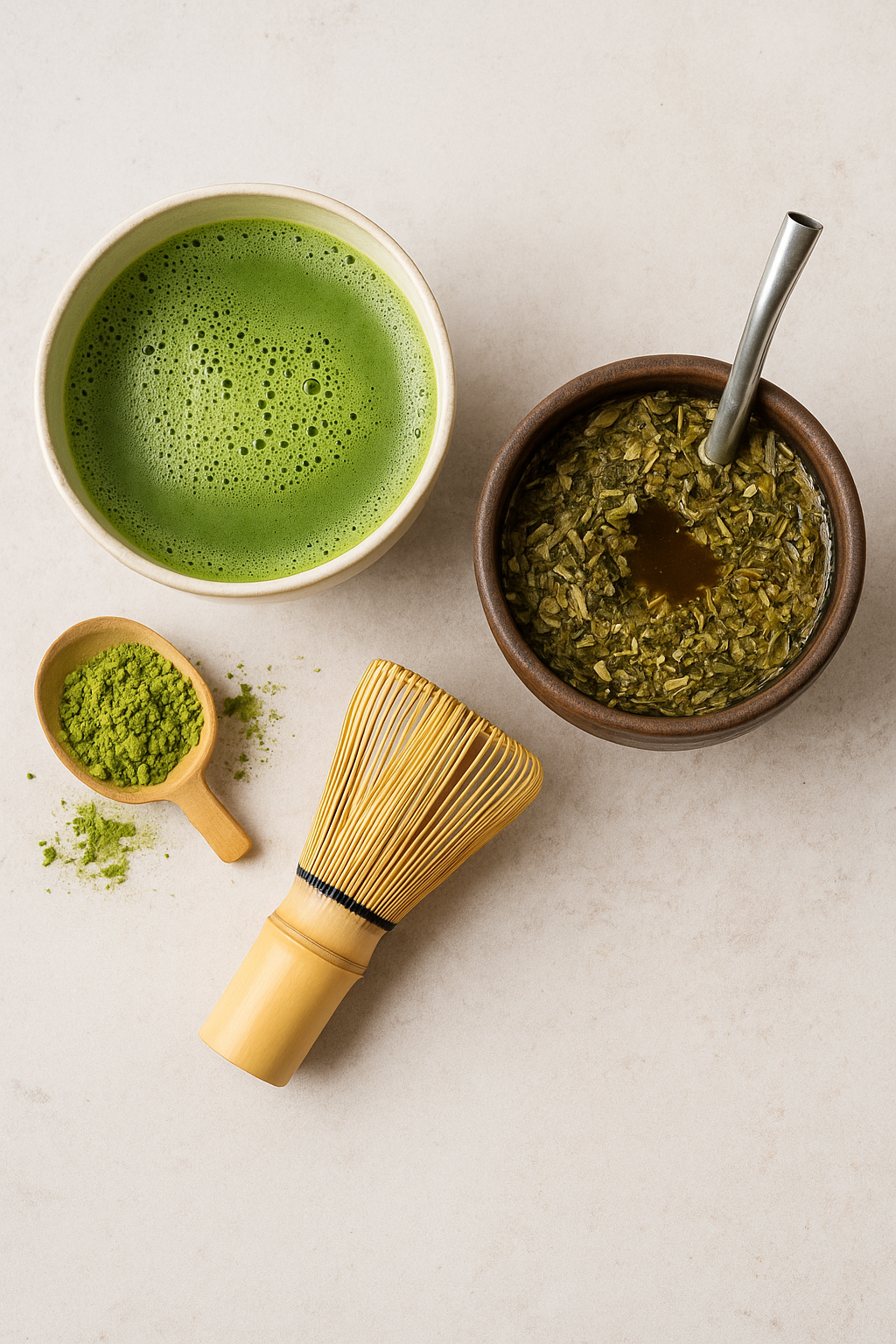
Iconic Japanese tea or energising South American infusion: matcha and maté both appeal for their wellbeing virtues and their richness in antioxidants.
This comparison helps you make an informed choice based on your needs: gentle energy or a quick boost, a meditative or a social ritual, a vegetal or a bitter taste.
| Criterion | Matcha (Japan) | Maté (South America) |
|---|---|---|
| Origin | Japan | Argentina, Brazil, Paraguay, Uruguay |
| Plant | Camellia sinensis (green tea) | Ilex paraguariensis (yerba maté) |
| Preparation | Powder whisked in a bowl (chasen) | Leaves steeped in a gourd with a bombilla |
| Taste | Vegetal, umami, slightly bitter and sweet | Bitter, herbaceous, sometimes smoky |
| Caffeine | About 75 mg/serving | About 80 mg/serving |
| Antioxidants | EGCG, catechins, vitamins C and E | Polyphenols, catechins, vitamins B and C |
| Energy effect | Gentle, steady energy with no jitters thanks to L-theanine | Immediate, stimulating energy, close to coffee |
| Ritual | Individual, meditative, codified | Collective, social, rooted in popular culture |
| Symbolism | Serenity, introspection, zen ritual | Sharing, solidarity, everyday life rooted in social tradition |
Origin & Culture of Matcha and Maté
Matcha: a thousand-year-old Japanese tradition
Matcha comes from Camellia sinensis, the same tea plant used for classic green teas. The leaves are shaded for 3 to 4 weeks before harvest, which increases their content of chlorophyll, L-theanine and antioxidants.
Once picked, the leaves are steamed, dried and then finely ground to obtain an intense green powder. Matcha is at the heart of the Japanese tea ceremony (chanoyu), a codified ritual combining aesthetics, meditation and respect for the present moment.
Maté: a South American infusion
Maté comes from Ilex paraguariensis, a shrub in the holly family grown mainly in Argentina, Brazil, Uruguay and Paraguay. The leaves are harvested, dried, often lightly smoked, then ground.
Drunk for centuries by the Guaraní peoples, this beverage has taken root in South American cultures as a social ritual. Maté is traditionally drunk from a gourd, in a group, everyone sharing the same metal straw (bombilla), a symbol of conviviality and sharing.
Preparing Maté & the Matcha Ritual
Fancy making this matcha at home?
Our Ceremonial Matcha, hand-harvested in Japan, is mild and free of bitterness.
Discover our Ceremonial Matcha →Matcha: precision and focus
Preparing matcha follows a codified set of movements, a symbol of calm and focus. It needs few ingredients but specific equipment:
- Sift 1 to 2 grams of powder into a matcha bowl (chawan).
- Add about 70 ml of hot water at 70–80 °C.
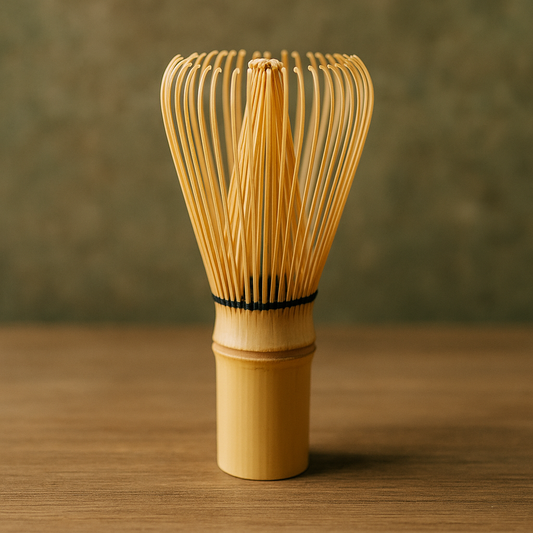
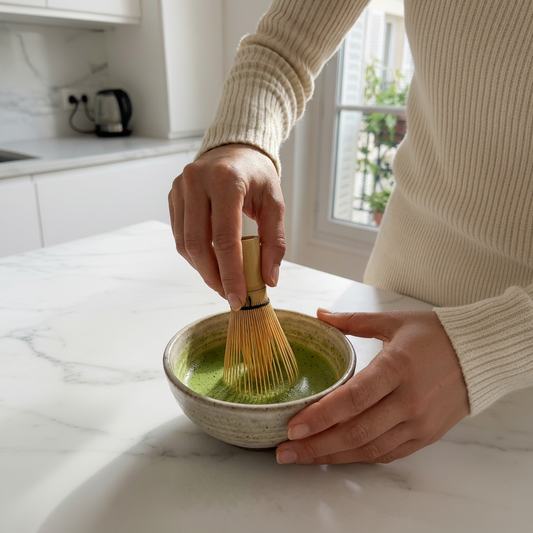
- Whisk quickly with a chasen (bamboo whisk) until you get a fine, even foam.
This method, drawn from the Japanese tea ceremony, turns a simple gesture into a meditative, sensory practice.
👉 For a complete guide, see: How to prepare matcha step by step
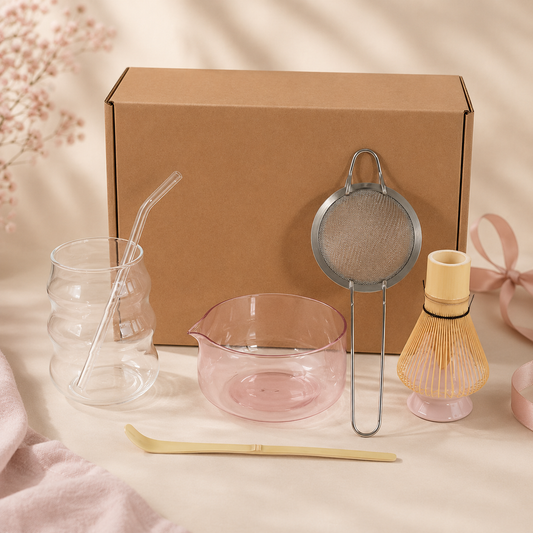
And to get off to a good start, discover our complete matcha kit, ideal for the perfect preparation at home.
Maté: a collective ritual
Maté is prepared using a technique unique to South American cultures:
- Fill a gourd 2/3 full with maté leaves.
- Tilt it to create a slope with the leaves.
- Insert the bombilla on the empty side.
- Pour hot water (70–80 °C) without completely flooding the leaves.
- Drink, then refill with water several times.
This infusion is designed to be shared: everyone drinks in turn from the same gourd, reinforcing the communal side of the moment.
Taste & Texture of Maté and Matcha
Matcha: vegetal intensity and umami
Matcha offers a unique taste profile, rich in umami, with a pronounced vegetal base. Well prepared, it reveals a slight bitterness balanced by a natural sweetness from its L-theanine content. That's our promise at OhMatchaa!
Its texture is smooth, almost creamy, thanks to the fine powder emulsified in water. This taste can surprise you at first, but it quickly becomes a signature loved by fans of full-character teas.
Maté: rustic bitterness and earthy notes
Maté stands out for its bitter, herbaceous flavour, sometimes accompanied by smoky or earthy notes depending on the drying methods. More direct than matcha, it appeals to lovers of raw, natural tastes.
Steeped several times, maté evolves on the palate with each refill, gradually becoming milder. Its texture is more watery, with no foam.
Caffeine & Energy from Matcha or Maté
Matcha: gradual, lasting stimulation
Matcha contains around 75 mg of caffeine per serving (1 to 2 g of powder). Its distinctive feature lies in the presence of L-theanine, an amino acid that moderates the effect of caffeine. The result: gentle, prolonged energy, with no sharp spike or jitters.
This caffeine-L-theanine duo supports focus and mental clarity.
Maté: immediate, sustained energy
Maté offers a comparable amount of caffeine, around 80 mg per serving, with a more rapid, energising effect. Its impact is often compared to coffee, but with a steadier rise.
Without L-theanine, maté's effect can feel more direct, even physically stimulating, which makes it popular with students and athletes looking for a quick lift.
New to matcha?
The Matcha Kit brings together everything you need to get started: traditional powder, whisk and bowl.
Use our Matcha Kit →Antioxidants & Health Benefits of Matcha and Maté
Matcha: a concentrate of EGCG and vitamins
Matcha is recognised for its high content of antioxidants (catechins), including epigallocatechin gallate (EGCG), a compound with anti-inflammatory and protective properties against oxidative stress.
Drunk as a powder, matcha lets you take in 100% of the leaves, which makes it one of the most powerful teas from a nutritional point of view. It's rich in vitamins C and E, beneficial for the skin and the immune system.
Maté: polyphenols and essential minerals
Maté also contains a wide variety of antioxidants, notably catechins, polyphenols and saponins, which help fight cell ageing.
It also provides vitamins B, C, E, as well as magnesium, potassium and zinc, supporting cognitive, muscular and immune functions. Although the infusion limits the direct absorption of the leaves, its contributions remain significant with regular consumption.
Conclusion: which to choose between matcha and maté?
Matcha and maté are two drinks naturally rich in antioxidants, caffeine and nutritional benefits. Yet their effects, flavours and cultures differ fundamentally.
- To support focus and reduce stress, matcha is ideal. Thanks to its combination of caffeine and L-theanine, it offers many benefits such as gentle, prolonged stimulation. It fits perfectly into a personal ritual centred on wellbeing.
- For more immediate energy and social drinking, maté is a better fit. Its group preparation and quick effect make it a lively drink rooted in everyday life.
- When it comes to antioxidants, both are excellent: matcha relies on EGCG and vitamins, while maté relies on polyphenols and minerals.
Your choice will therefore depend on your energy needs, your taste preferences and the type of experience you're after.
➤ To learn more about this green powder, read our article: What is matcha?