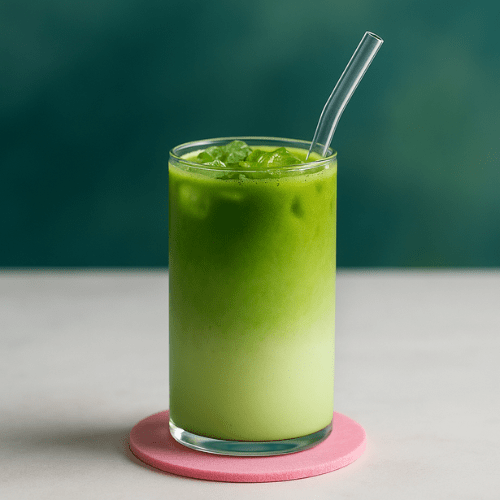


Matcha is an ultra-fine green tea powder, originally from Japan and China. Unlike other teas, you don't steep it: you whisk it into hot water and drink it whole. The result: more flavour, more nutrients, and a genuine moment of wellbeing.
The origins of matcha
Matcha's roots go back centuries. The word "matcha" comes from Japanese:
- "ma" (抹) = to grind
- "cha" (茶) = tea
In other words: ground tea.
Where does it come from?
Matcha was born in China during the Tang dynasty (618–907), where powdered tea was already being drunk. But it was in Japan that it found its current form and its fame.
- In the 12th century, the monk Eisai brought this know-how from China to Japan.
- Zen Buddhist monks began using this tea to support focus and alertness during meditation.
- Matcha became a ritual in its own right and a symbol of refinement.
Where is it grown today?
Matcha is often produced in Japan, in specialised regions where the right climate and expertise come together:
|
Region |
What makes it special |
|
Uji (Kyoto) |
Renowned for producing the most prestigious matchas. An ideal misty climate. |
|
Nishio (Aichi) |
Very high production volume, mild taste, matcha that is often more affordable. |
|
Shizuoka |
Better known for other teas, but growing in the matcha market. |

How is matcha made?
Matcha isn't just green tea ground into powder. The way it's made is unique, and that's what gives it its intense colour, its sweetness and its benefits.
Before it reaches your cup, a good ceremonial matcha like OhMatchaa! goes through several strictly codified steps:
- Shade growing (3 to 4 weeks before harvest): the tea plants (tencha cultivar) are covered to block direct sunlight. The result: more chlorophyll, more L-theanine, a milder taste.
- Hand harvesting: only the young top leaves are selected. That's where the nutrients and the finesse are concentrated.
- Steaming : the leaves are heated with steam to stop oxidation. This keeps the bright green colour.
- Drying without rolling: unlike other teas, the leaves aren't rolled. This is how you get tencha.
- Stone-mill grinding: the tencha is then ground very slowly (around 30 g/h) in granite mills to produce an ultra-fine powder: matcha.
|
Step |
Role in matcha quality |
|
Shading |
Boosts sweetness and the intensity of the green |
|
Fine harvesting |
Guarantees a higher-quality powder |
|
Steaming |
Stabilises the aromas and the colour |
|
Mill grinding |
Gives a silky, lump-free texture |
New to matcha?
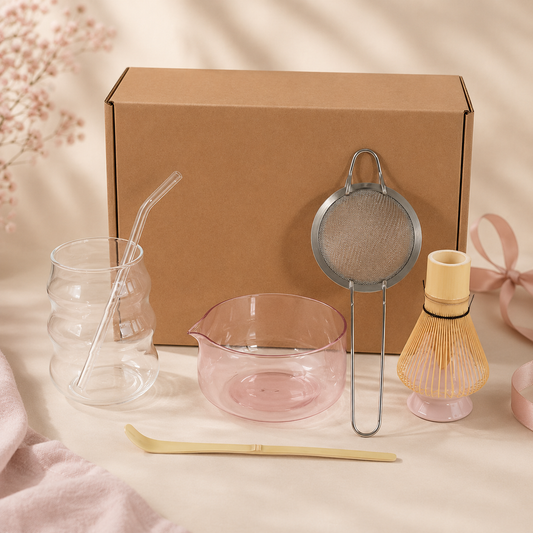
The Matcha Kit brings together everything you need to get started: traditional powder, whisk and bowl.
Use our Matcha Kit →What does matcha taste like?
Matcha has what's known as an umami flavour, often called the 5th taste (neither sweet, nor salty, nor sour, nor bitter).
|
Type of matcha |
Taste profile |
|
Ceremonial grade |
Mild, rounded, creamy, with no marked bitterness |
|
Premium grade |
Balanced, slightly bitter, but pleasant |
|
Culinary grade |
More bitter, more vegetal, ideal in recipes |
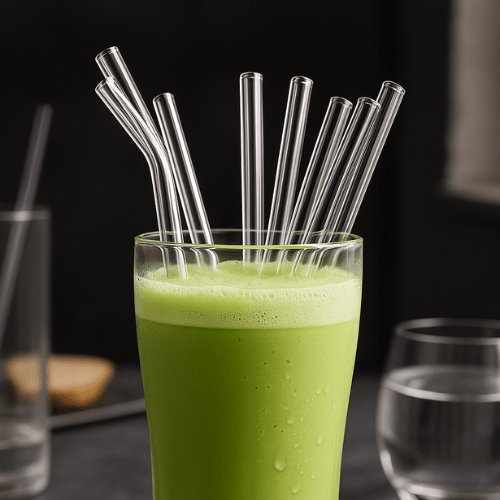
If your matcha is too bitter or yellow/brown, it's probably oxidised or of poor quality. The taste can also change depending on the water temperature and how you prepare it (traditional or latte, ideally in a clear glass to reveal its colour):
- Colour: bright green for a good matcha
- Aroma: fresh grass, seaweed, hazelnut, sometimes slightly sweet
- Texture: fine like talc, not grainy
The benefits of matcha
Drinking matcha isn't just following a trend: it's adopting a ritual that has proven itself. This powdered green tea is often presented as a "superfood", but at OhMatchaa! we prefer to call it a super-habit.
- Gentle, steady energy : thanks to caffeine and L-theanine, matcha wakes you up without the jitters. The effect is more gradual than coffee, with no crash.
- Focus + calm = winning combo: L-theanine supports a state of calm concentration.
- Rich in antioxidants (catechins, EGCG): these compounds help your body fight oxidative stress (linked to cell ageing).
- A boost for metabolism: matcha + physical activity = a slight increase in energy expenditure.
- Brighter skin: vitamins C, E and chlorophyll: a trio that can help protect your skin from external aggressors.
Are there any side effects to drinking matcha?
Matcha is good for you, but you need to get the dose right. We recommend drinking 1 to 2 bowls per day at most. Well prepared and well chosen, it's safe for the vast majority of people. For pregnant women, it's best to check with a doctor.
- Caffeine : 30 to 35 mg per gram, less than an espresso, but more than a tea. If you're sensitive to caffeine, avoid drinking it after 4pm.
- Stomach : taken on an empty stomach, matcha can be irritating. In that case, try drinking it after a light meal or with plant-based milk.
- Oxalates : naturally present in many plants, oxalates can be a problem in high doses if you're prone to kidney stones.
- Medication : ask your doctor for advice if you're on any treatment (e.g. blood thinners).
Fancy making this matcha at home?
Our Ceremonial Matcha, hand-harvested in Japan, is mild and free of bitterness.
Discover our Ceremonial Matcha →How to enjoy matcha?
A good matcha is above all a matter of simple movements and quality accessories.
|
Method |
Description |
When? |
|
Traditional (Usucha) |
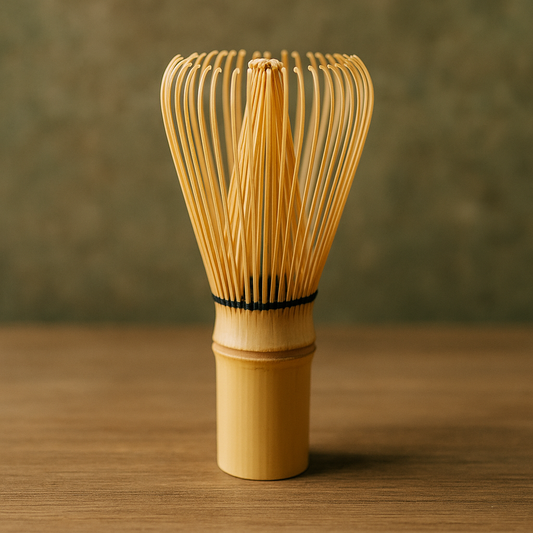
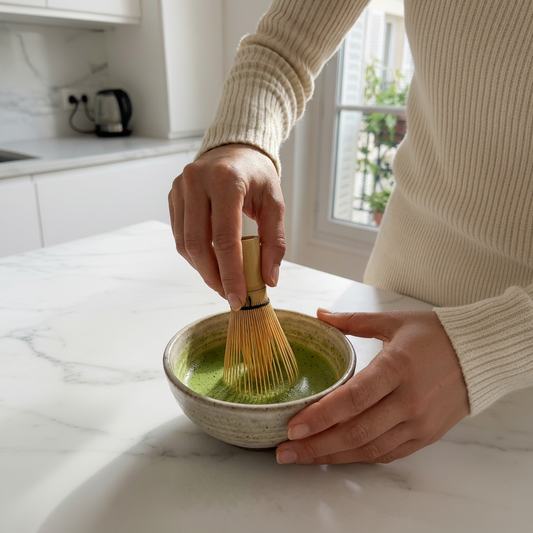
1 to 2g of matcha whisked into 70-100 ml of hot water (70-80°C) with a bamboo whisk (chasen) |
In the morning or before a focused task |
|
Matcha latte |
1 to 2g of matcha diluted in a little water, then mixed with warm plant-based milk (oat, soy, almond…) |
A cosy break, a snack, or as a coffee replacement |
We recommend using low-mineral water so you don't spoil the taste. And be careful never to boil matcha: above 80°C, it turns bitter and loses its benefits.
And, little secret, matcha can also be used in baking (éclairs, tiramisu, macarons), smoothies, sauces...
Which matcha to choose?
Colour, taste, use… behind this green powder lie big differences in quality.
|
Grade |
Use it for... |
Taste |
Price (rough guide) |
|
Ceremonial |
Drinking pure (usucha, koicha) |
Mild, rounded, umami |
💰💰💰 |
|
Premium |
Matcha latte, smoothies, regular use |
Balanced |
💰💰 |
|
Culinary |
Baking, savoury recipes |
More bitter |
💰 |
FAQ
Can you drink matcha every day?
Yes, as long as you don't overdo it. One to two cups a day suits most people. If you're sensitive to caffeine, avoid drinking it late in the day.
Why is matcha more expensive than other teas?
Matcha is "expensive" because growing it takes more work (shading, leaf selection, slow grinding) and it takes a lot of leaves for a little powder. It's an artisanal product, not an industrial one.
Is matcha suitable for pregnant women?
Matcha contains caffeine, so moderation is essential during pregnancy. It's best to ask a healthcare professional for advice before drinking it regularly.