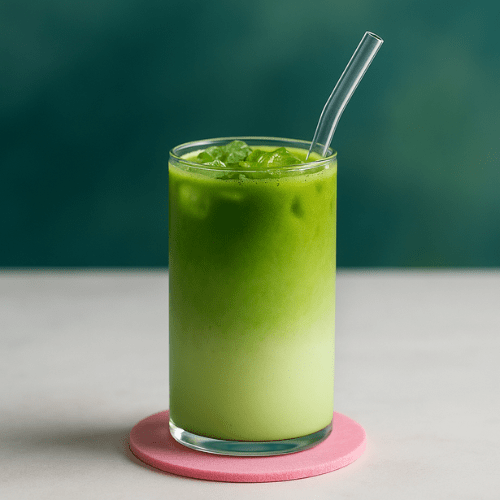


The matcha latte has established itself as the must-have drink for wellbeing lovers: in France, 88% of matcha drinkers prefer it as a latte, and 45% have one every day.
What is a matcha latte?
A matcha latte is matcha tea whisked with hot water, then topped up with milk, hot or cold. It's the coffee alternative full of benefits that ticks every box: steady energy, a mild vegetal taste, and zero jitters.
Origin and history of the matcha latte
The matcha latte is a drink of Western origin that adapts the Japanese tea ceremony to the aesthetic of modern cafés. The matcha itself has been produced in Japan since the 12th century, mainly in the regions of Uji, Nishio and Fukuoka.
It was the culture of American and European coffee shops in the 2010s that popularised the matcha-and-frothy-milk pairing, in response to the growing demand for coffee alternatives.
What's the difference from a classic matcha tea?
Traditional matcha tea, called usucha, is made only with hot water: 1 to 2 g of matcha powder whisked into 60 to 80 ml of water at 70-80 °C. The matcha latte adds hot or cold milk to this, in a proportion of 150 to 200 ml, which softens matcha's natural bitterness and increases the calorie intake. The texture becomes creamy and frothy, close to a cappuccino, whereas usucha remains a fine, slightly bitter and very concentrated drink.
What does a matcha latte taste like?
A well-made matcha latte offers a balance between matcha's vegetal umami flavour, a slight astringency and the milky sweetness of the milk. The taste varies with the quality of the matcha: a ceremonial-grade matcha offers mild, herbaceous notes, while a low-end culinary grade gives a bitter, earthy taste.

The essential ingredients for a successful matcha latte
Which matcha to choose for a latte: ceremonial or premium grade?
For a balanced latte, go for a ceremonial-grade matcha like the one we offer at OhMatchaa!: its colour is bright green, its texture silky, and its taste mild umami, with no bitterness. Avoid "culinary" matchas: cheaper (≈ 15 € for 100 g), but often more oxidised and bitter, perfect for baking but not for a glass of matcha.
💡 The promo code BLOG10 gives you 10% off your order on our site, with no minimum spend.
Fancy making this matcha at home?
Our Ceremonial Matcha, hand-harvested in Japan, is mild and free of bitterness.
Discover our Ceremonial Matcha →Which milk to use for a creamy matcha latte?
Whole milk (3.5% fat) produces the most stable foam and the creamiest texture. Among plant-based milks, oat milk is the most prized by baristas because its carbohydrate content encourages a dense foam. Soy milk gives a decent foam but with a slight distinctive taste. Almond milk, thinner, foams little and is better suited to the iced version. Whole coconut milk brings maximum creaminess but a pronounced taste.
Should you add a sweetener or sugar?
Ceremonial-quality matcha doesn't need any sugar. For lower grades or according to personal preference, half a teaspoon of agave syrup (about 5 ml) is enough to sweeten without altering the taste. Light floral honey works well, but dissolves less easily in cold preparations. Flavoured syrups (vanilla, caramel) can be used. Avoid white sugar directly in the matcha powder: it makes dissolving harder.
The perfect recipe: the right measurements for 1 matcha latte
Here's the winning formula for 1 cup (≈ 250 ml):
- Matcha: 1.5 to 2 g (≈ 1 level tsp or 2 chashaku)
- Hot water: 60–80 ml at 70–80 °C max
- Milk: 150–200 ml (cow's or plant-based such as oat/almond, unsweetened). Hot or cold
- Sweetener (optional): 1 tsp of honey, maple syrup or sugar
💡 Don't boil the water or the milk: above 80 °C, matcha turns bitter and the milk loses its texture.
Steps: how to make your matcha latte?
- Sift the matcha through a fine sieve, straight into your bowl or mug
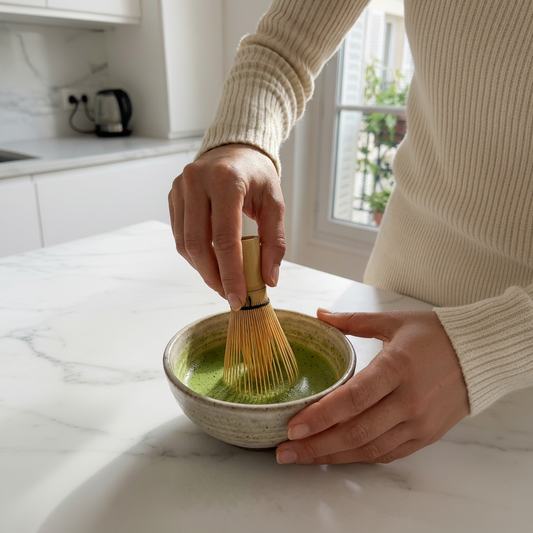
- Add the hot water (max 80 °C)
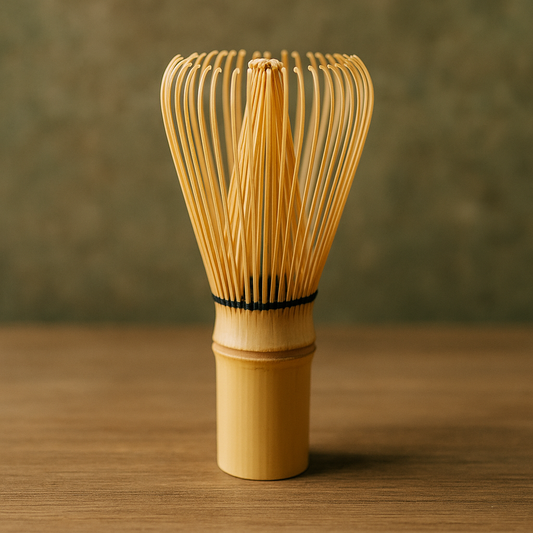
- Whisk in a quick "M" or "W" for 15–30 sec (chasen or milk frother)
- Heat and froth your milk (60–70 °C max)
- Assemble by gently pouring the milk over the matcha, adding the sweetener at the end if needed
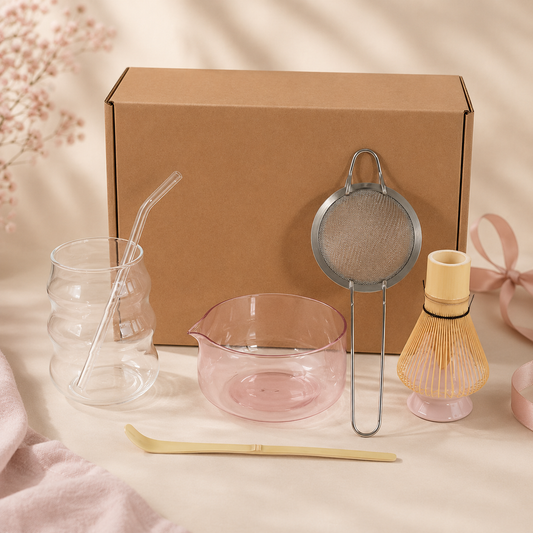
You'll find all the accessories you need in our matcha kits.
OhMatchaa! tips: the mistakes to avoid
| ❌ Common mistake | ✅ OhMatchaa! tip |
|---|---|
| Water too hot | Never go above 80 °C |
| Too little or too much powder | Stay between 1.5 and 2 g of matcha |
| Overheated milk | 60–70 °C max to keep the taste |
| No foam | Whisk fast, in an "M", with a chasen or frother |
💡 The winning combo: nicely tempered water + bamboo whisk = fine, dense foam. If your milk won't froth, try barista oat milk, it's the go-to for a creamy latte.

Matcha latte variations
The matcha latte lends itself to every craving:
- Iced Blue Matcha latte: make your matcha, then add a touch of blueberry or blackberry.
- Plant-based version: oat, soy, almond, coconut... each brings a different texture and taste. The "barista" version of these milks gives a better foam.
- Sweet twist: maple syrup, coconut sugar or honey, each lifts the taste of matcha without masking it.
New to matcha?
The Matcha Kit brings together everything you need to get started: traditional powder, whisk and bowl.
Use our Matcha Kit →FAQ: Frequently asked questions about the matcha latte
Can you make a matcha latte in advance?
The matcha base (matcha + water) keeps for up to 24 hours in the fridge in an airtight container. The frothy milk, however, must be made at the last minute: the foam dissipates in less than 10 minutes.
How much matcha to use for a latte?
The standard dose is 2 g of matcha (1 level teaspoon) for 150 to 200 ml of milk. For a more pronounced taste and a more intense colour, go up to 3 g. Below 1.5 g, the taste of matcha disappears behind the milk.
Does a matcha latte contain caffeine?
Yes. A serving of matcha latte made with 2 g of matcha contains between 60 and 140 mg of caffeine, depending on the quality and grade of the matcha used. For comparison, an espresso contains 60 to 80 mg of caffeine per 30 ml. The L-theanine present in matcha (about 50 mg per 2 g of powder) moderates the effects of caffeine and reduces the feelings of anxiety or jitteriness often linked to coffee. People who are sensitive to caffeine, as well as pregnant women, should take this intake into account: detailed recommendations on matcha during pregnancy set out the thresholds not to exceed.
Can you make a matcha latte without milk?
Yes. Replace the milk with a plant-based drink such as oat, rice or hemp, or simply with hot water to go back to a classic matcha tea. For a creamy version without dairy or plant milk, some use coconut water served cold, which brings a slight natural sweetness.
What time of day should you drink a matcha latte?
The optimal window is between 9am and 2pm, once the natural morning cortisol peak has come back down (around 9-9:30am). Avoid drinking it after 4pm if you're sensitive to caffeine, as its half-life is 5 to 6 hours. To find out the recommended daily amount of matcha for your profile, precise guidelines exist based on age, weight and caffeine tolerance.